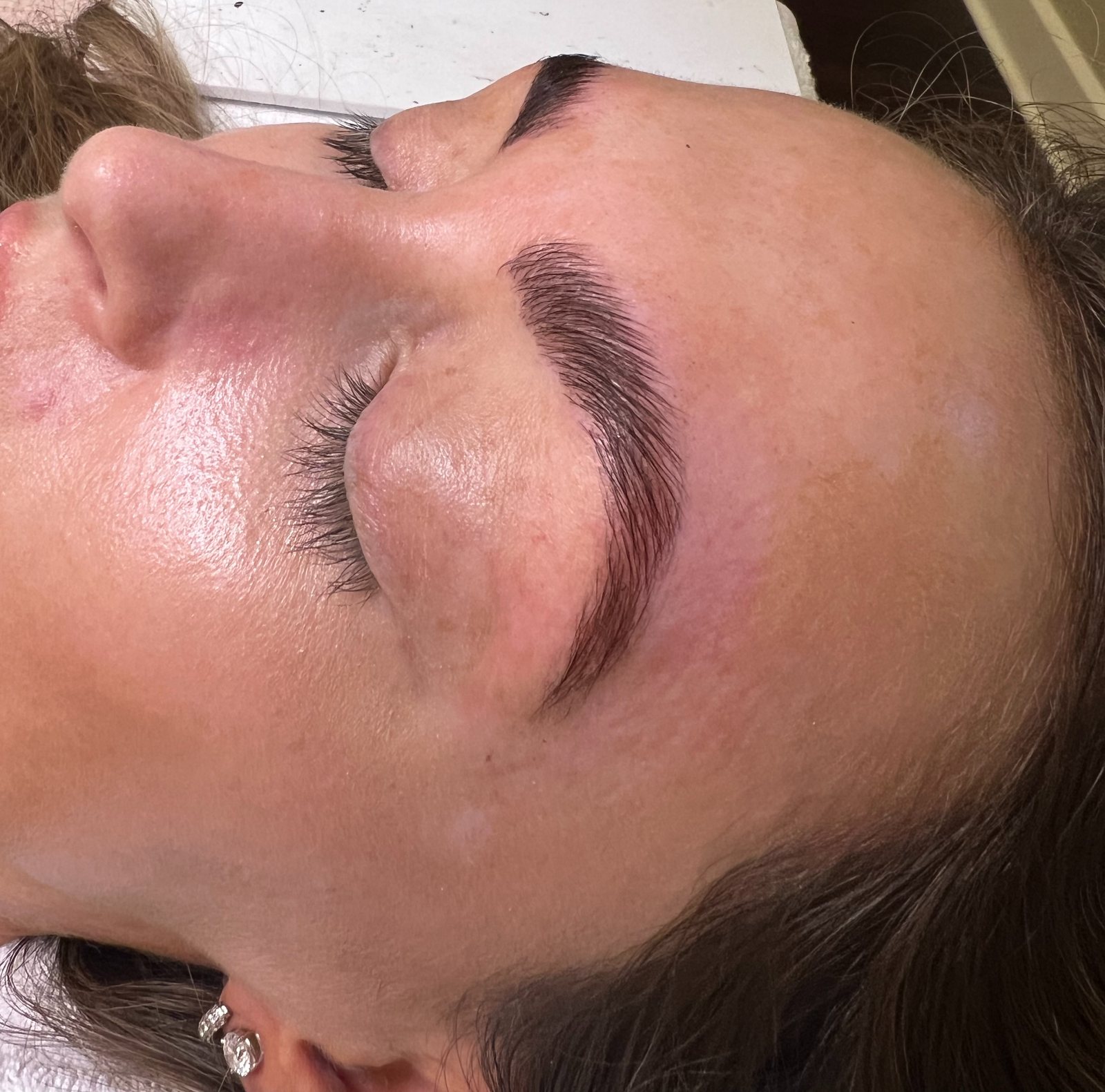
We tell every Total Brow client the same thing on the way out: 8 to 12 weeks before you come back. Some studios will book you every 4 to 6. We won't. Here's the chemistry behind why.
Brow lamination works by temporarily breaking the bonds inside each brow hair. That's how we can brush a stubborn downward-growing hair into a new upward shape. Done at the right intervals, the hair recovers fully and the next session works as well as the last. Done too often, the cumulative chemical stress causes breakage. I've seen what brows look like after 6 months of monthly lamination at competitors — short, broken, lifeless. I won't do that to yours.
The 8-to-12-week cap on The Total Brow isn't a scheduling preference. It's a brow-health protocol. Here's the full picture.
How brow lamination actually works (chemistry primer)
Inside every hair — on your head, your lashes, your brows — there are disulfide bonds. These are the chemical links that hold the keratin protein structure in shape. They determine whether your hair is straight, wavy, curly, or growing in a particular direction.
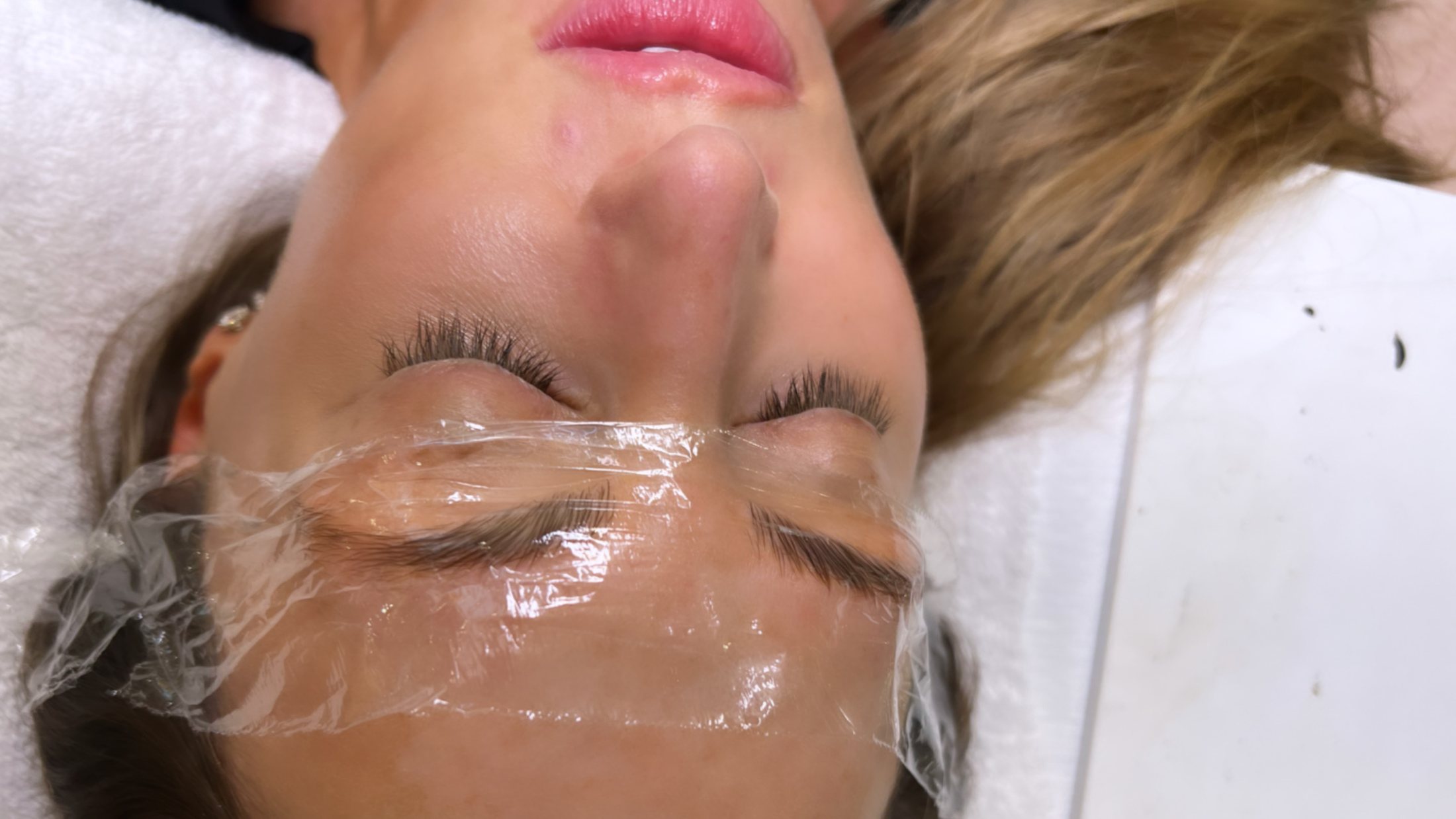
Lamination uses a solution containing cysteamine hydrochloride to temporarily break those disulfide bonds. The brow hair becomes soft and malleable. We brush it into the shape we want — upward and outward, in most cases. A neutralizer is then applied, which rebuilds the bonds in the new direction. The bonds hold for 8 to 12 weeks before slowly relaxing back to the hair's natural pattern.
This is essentially a perm. A controlled, professional, carefully neutralized perm — but a perm. And the same physics that make a perm work make over-perming destructive.
The hair-shaft breakage problem
Each lamination cycle is a chemical stress event on the hair shaft. When the bonds rebuild after one session, the hair recovers fully — as long as it has enough rest time before the next session. Eight to twelve weeks is enough rest.
Less than that, and you start a damage curve. The bonds don't fully re-stabilize before the next round of chemical disruption. The cuticle weakens. The hair becomes brittle. By month four or five of monthly lamination, you start seeing the result: short, blunted, broken-off hairs that have snapped mid-shaft. The shape can't hold anymore because there's no length to brush. Tint won't take properly. The follicle is fine — the hair is just shredded.
The fix is: don't get there in the first place.
Done at the right intervals, the hair recovers fully. Done too often, you'll see broken short hairs 6 months in. I've seen that. I won't do it to yours.
Why Elleebana Elleeplex Profusion still has a ceiling
We chose Elleebana Elleeplex Profusion for our Total Brow specifically because it's gentler than older formulas. Elleeplex is TGA-free, uses cysteamine hydrochloride as its active base, and includes built-in lash and brow damage defense via amino acid technology. Compared to the older thioglycolate-based competitors, it's a meaningful step forward in protecting the hair shaft during the chemical process.
But "gentler" doesn't mean "limitless." Every lamination formula on the market relies on the same underlying mechanism: breaking and rebuilding bonds. Elleeplex protects the cuticle better and includes some restorative elements, but it doesn't change the physics. The 8-to-12-week rest cadence is still the right protocol.
What "I want it more often" usually means
Once or twice a month, a client books a 6-week rebook and asks whether we can do it anyway. Sometimes the answer is genuine — their brow hair really is growing out faster than average. Humidity (welcome to Florida), age, growth-cycle phase, and individual hair density all affect how long lamination holds.
But the fix in that case isn't more lamination. The fix is daily maintenance — a brow gel for hold, a conditioning serum at night, a spoolie brush each morning. If you're styling with a good brow gel between sessions, you can stretch the visible shape closer to the 12-week end of the window even when the underlying lamination has started to soften.
How to maintain in between
Real maintenance is small daily habits, not more in-studio service:
- Spoolie brush every morning. Brush the hairs up and outward. Train the shape by reinforcing it daily.
- Brow gel for hold. $15 to $20 retail, any brand you like. Clear or tinted, your call. This is the single biggest extender of laminated shape.
- Conditioning serum at night. Castor oil works. So do dedicated brow serums. Hydrated hair holds shape better than dry hair.
- Skip oil-based cleansers on the brow area. They break down both the lamination and any tint.
- Be gentle when washing your face. Don't scrub the brows. Pat dry.
When 12 weeks is the right cadence for you
Not every client should rebook at 8 weeks. Some should hold to 10. Some to 12. The variable is your hair density and texture:
- Fine, sparse hair — closer to 12 weeks. Fine hair is more vulnerable to repeated chemical exposure and benefits from longer rest cycles.
- Coarse, dense hair — closer to 8 weeks. Coarser hair tolerates the chemistry better and tends to lose the laminated shape faster.
- Medium hair — most clients land in the 10-week range. We'll tell you exactly which at your appointment.
We'd rather protect your brow health than over-service you. That's why we wrote the page. That's why we wrote this article. And that's why, when you ask whether we can squeeze you in at week six because you have a wedding, the answer is almost always: let's do the Brow + Lash Tint Combo instead, and rebook the full Total Brow at week eight. Your brows will thank us in six months.